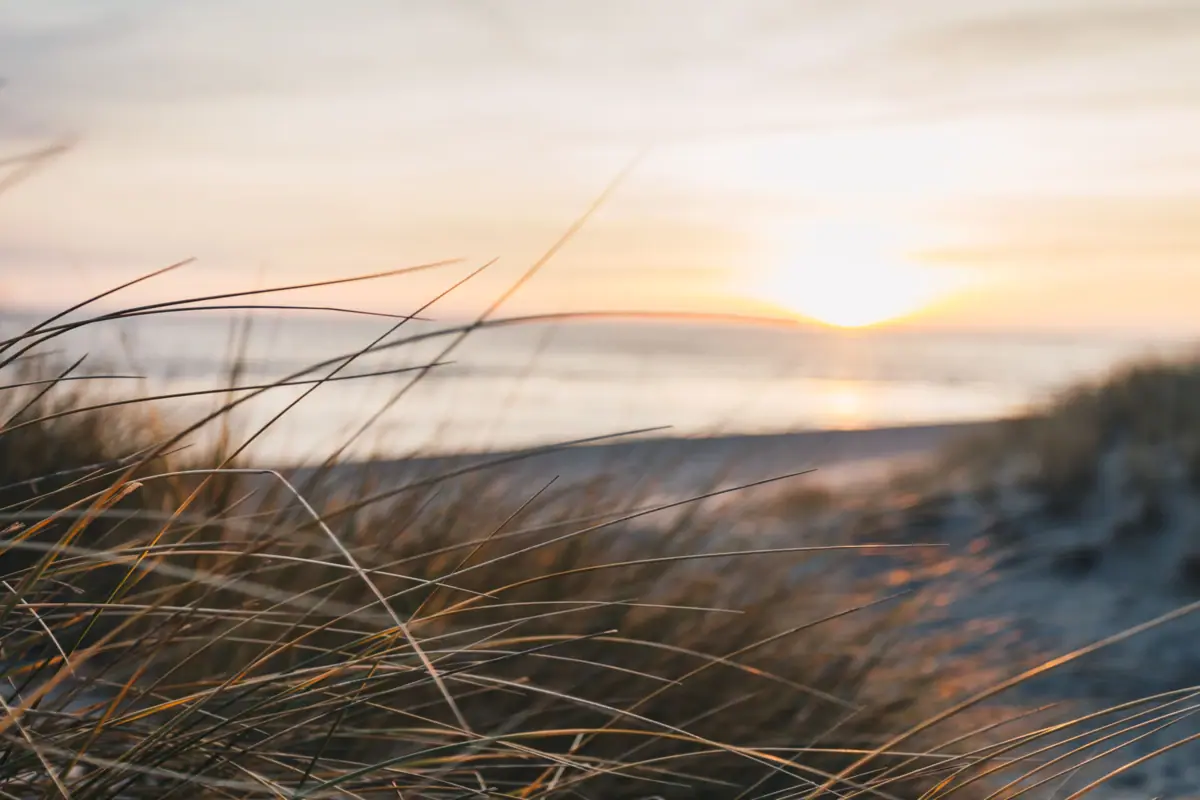
Sylt’s sights: from cliff to cliff, from dune to dune.
Wind that tastes of salt. Sand that gives way beneath your feet. And a new view behind every dune.
Sylt tells its story through colours: in the rust-red of the cliffs near Kampen, in the pale sand of the shifting dunes near List, and in the lush green of the salt marshes by the Wadden Sea. As you explore Sylt’s sights, you’ll journey from Germany’s northernmost tip to the windswept southern tip near Hörnum, discovering an island that reveals a new side to itself every few kilometres.
Our guide takes you from north to south. We begin where your holiday at A-ROSA Sylt begins: in List.
From north to south:
- Lister Ellenbogen with the List-West and List-East lighthouses
- List Harbour
- Shifting dunes in the List region
- Naturgewalten Experience Centre
- Uwe Dune
- Red Cliff
- Kampen and the Kampen Lighthouse
- Braderup Heath
- Denghoog in Wenningstedt
- Westerland with its promenade and Friedrichstraße
- Keitum, the captains’ village
- Morsum Cliff
- Hörnum Lighthouse
- Hörnum Odde
- Wadden Sea UNESCO World Natural Heritage Site
Places of interest
in the north of Sylt.
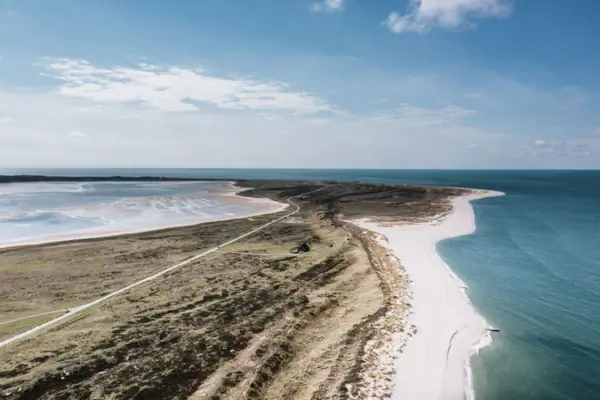
Lister's elbow
Germany’s northernmost point: a narrow, hook-shaped headland, with the open North Sea on one side and the tranquil Wadden Sea on the other. The Ellenbogen is a nature reserve and is privately owned. Sheep graze amongst the dunes, and on a clear day you can see as far as the Danish island of Rømø. A short walk leads from the last car park to the country’s northernmost point.
Good to know:
- The Ellenbogen can only be reached by car via a private road subject to a toll.
- Access on foot or by bike is free of charge.
- Swimming is prohibited at Ellenbogen: this is where the North Sea and the Wadden Sea meet, and the currents are dangerous.
Read more about the beaches around the Ellenbogen here:
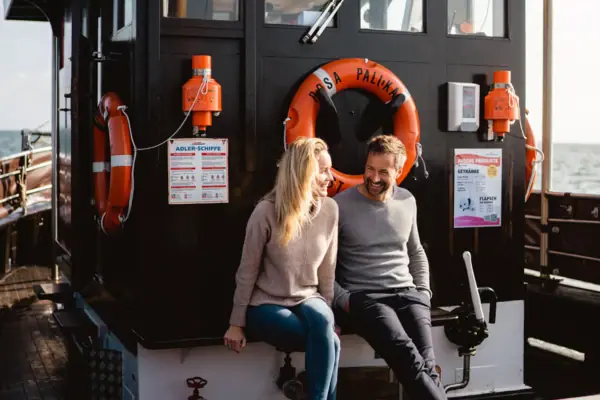
List Harbour
Fish rolls, oysters and wanderlust: seagulls circling the masts, the scent of smoked fish, fishing boats coming in. Lister Harbour is the vibrant heart of the north and just a few minutes’ walk from the A-ROSA Sylt.
What awaits you here:
- Gosch’s fish stall, known since 1972 as Germany’s northernmost fish stall
- Sylt oysters right by the water’s edge
- Excursion boats to the seal colonies
- The ferry across to Rømø in Denmark
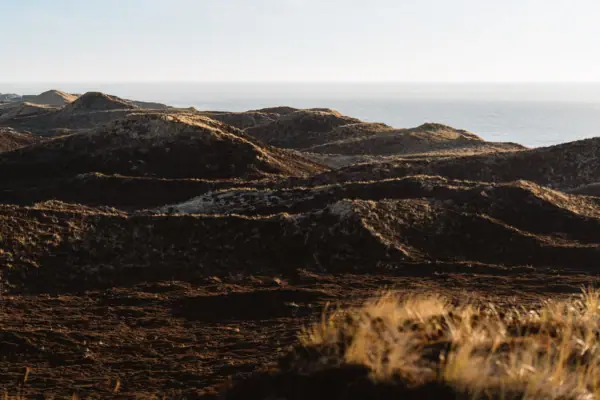
Shifting dunes in Listland
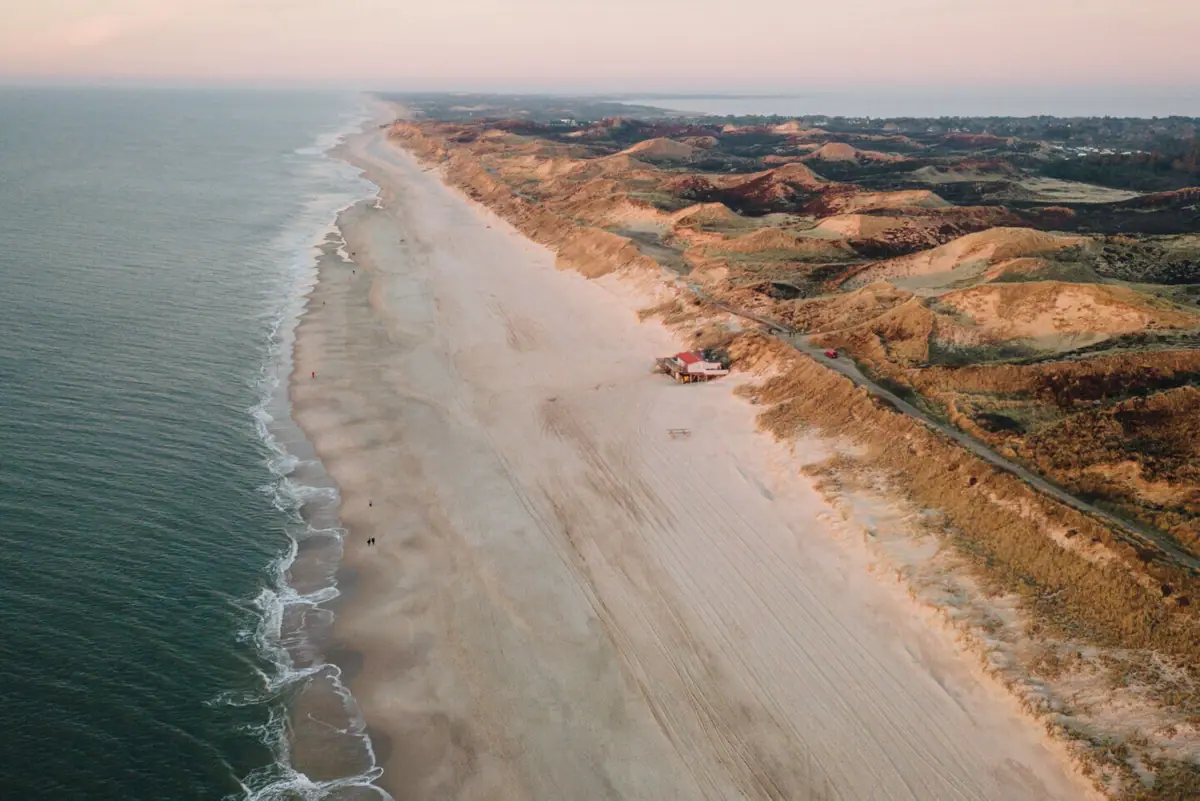
Sand in motion: anyone standing before them for the first time momentarily forgets that they are in Germany. The shifting dunes in Listland are the largest in Germany; the biggest of them is around one and a half kilometres long. Year after year, the wind pushes them a little further east, grain by grain. The dunes are a protected nature reserve and must not be walked on. The best view is from the viewing dune on Mövenbergstraße, particularly in the late afternoon when the light softens and the sandy expanses shimmer golden.
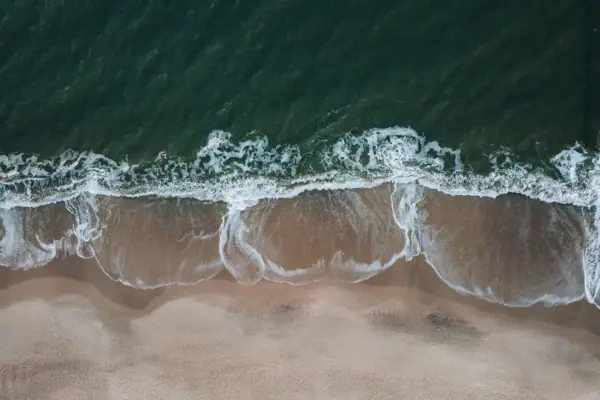
Naturgewalten Experience Centre
How do storm surges form? Why does an island drift? At the Naturgewalten Experience Centre in List, the North Sea comes to life: wind, waves, coastal protection and wildlife are explained in a clear and engaging way, with hands-on experiences. A lovely destination for families and one of Sylt’s best attractions for rainy days.
Sights on Sylt between Kampen and Westerland.
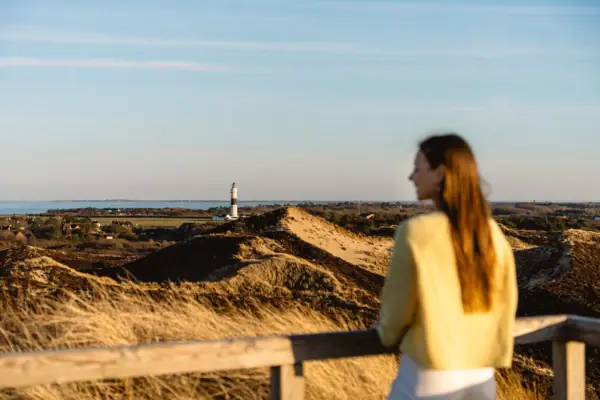
Uwe Düne
The highest point on the island: 52.5 metres. What would be a hill in the mountains is a peak on Sylt. The Uwe Dune near Kampen is the island’s highest natural elevation, named after the Sylt-born lawyer Uwe Jens Lornsen. A wooden staircase with 110 steps leads up to the viewing platform. Once at the top, you’re treated to a panoramic view: over Kampen, the heath, the sea and, on clear days, as far as the mainland. The path to the Rotes Kliff is just a few hundred metres from here.
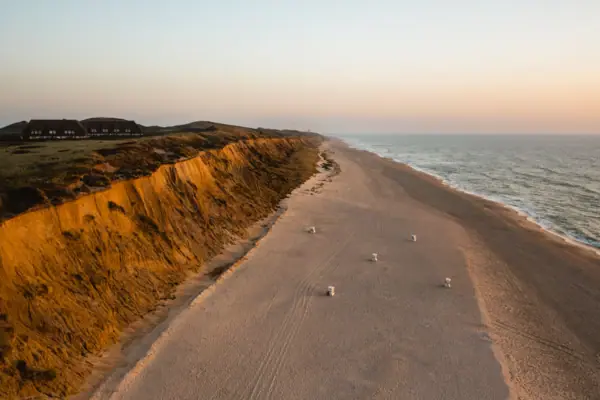
Red Cliff
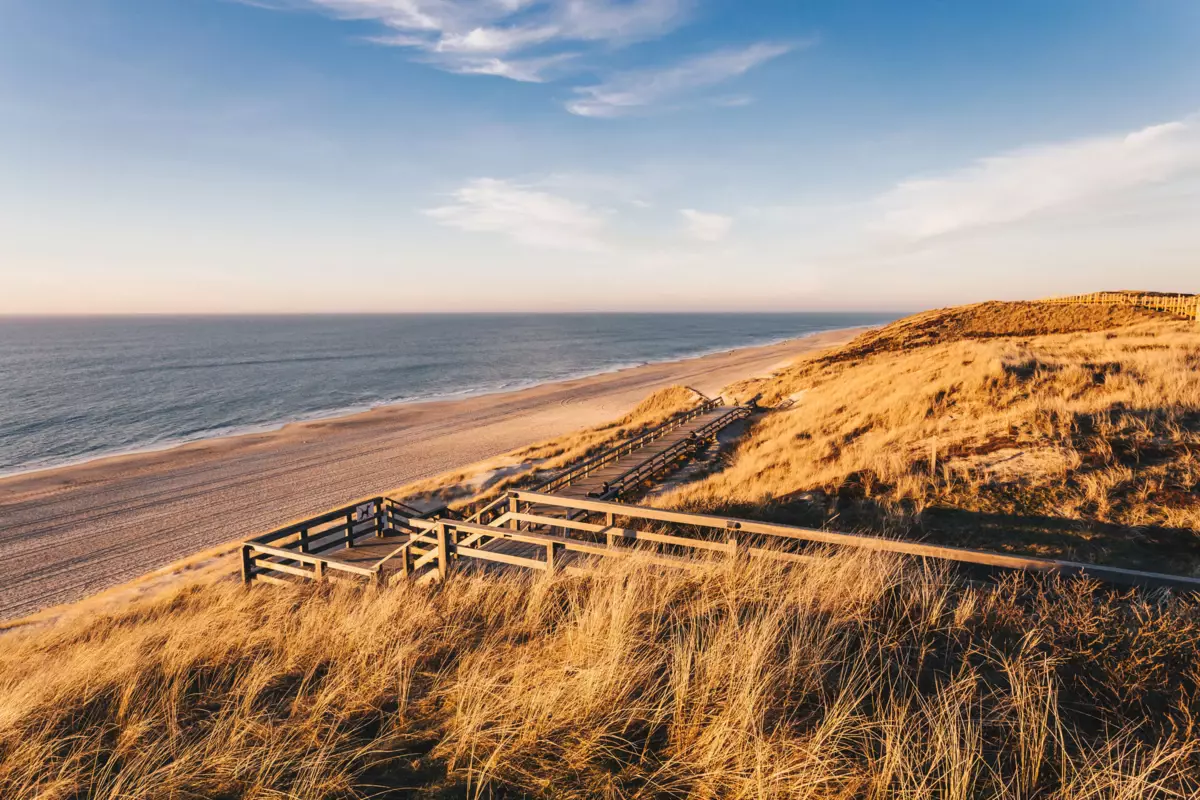
Where the evening sun colours the coast: the Red Cliff stretches for around four kilometres along the west coast between Wenningstedt and Kampen. It owes its colour to iron-rich rock deposited here by glaciers some 120,000 years ago. The cliff is at its most beautiful just before sunset. Then the sheer edge glows in warm shades of red, the surf roars below, and the dune grass sways above. A walk along the beach beneath the cliff is one of the quiet highlights of any holiday on Sylt.
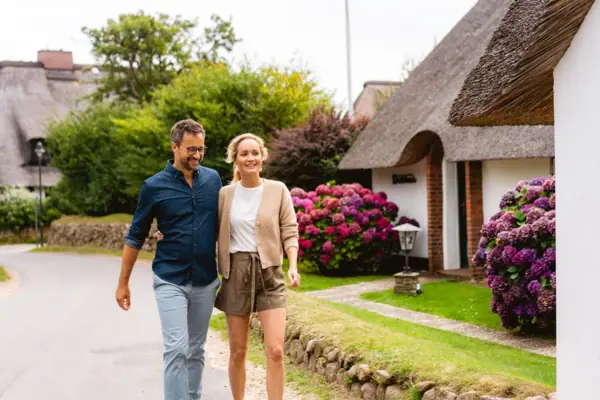
Kampen
Thatched roofs, well-maintained Frisian dykes, small galleries and boutiques: Kampen is the island’s best-known village. Its landmark is the black-and-white Kampen lighthouse, the oldest lighthouse on Sylt. It stands in the middle of the heath and can be seen from many points along the west coast.
Braderup Heath
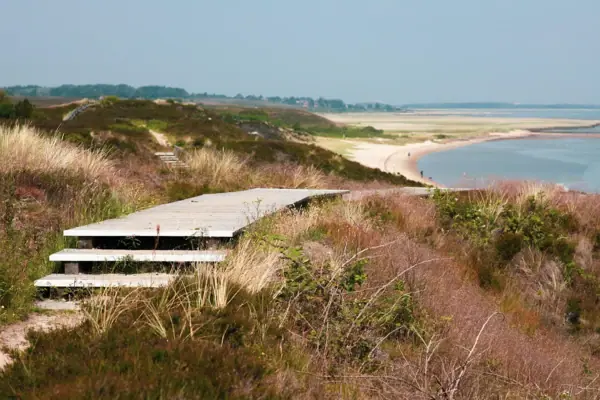
A vast expanse of purple by the Wadden Sea: on the eastern side, between Braderup and Kampen, a vast heathland opens up, stretching all the way to the mudflats. In late summer, the heath blooms in a rich shade of violet, whilst at the Weiße Kliff the land slopes gently down to the Wadden Sea. A place for peaceful walks, especially in autumn. You can find more inspiration for the golden season under ‘Autumn holidays on Sylt’.

Westerland
The promenade and island life: Westerland is the liveliest town on the island. The beach promenade is perfect for a leisurely stroll, whilst Friedrichstraße is ideal for a bit of a wander. It is also home to St Nicolai, Sylt’s largest church.
Denghoog
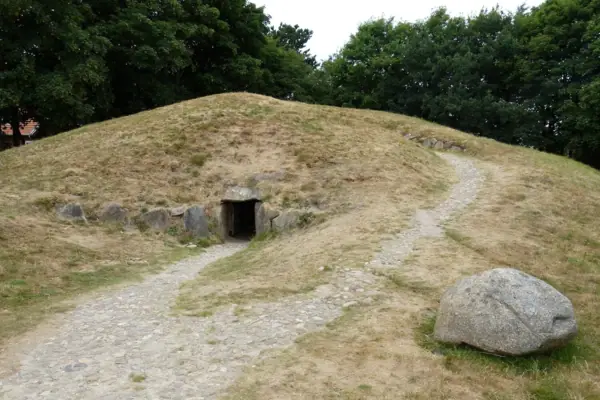
The Stone Age in Wenningstedt: Right in the centre of Wenningstedt stands one of the island’s oldest structures: the Denghoog, a Neolithic megalithic tomb. Massive boulders, a low passageway, a burial chamber that has stood the test of time for millennia. A place that shows just how long people have been living on Sylt.
Sights on Sylt in the east.
Keitum
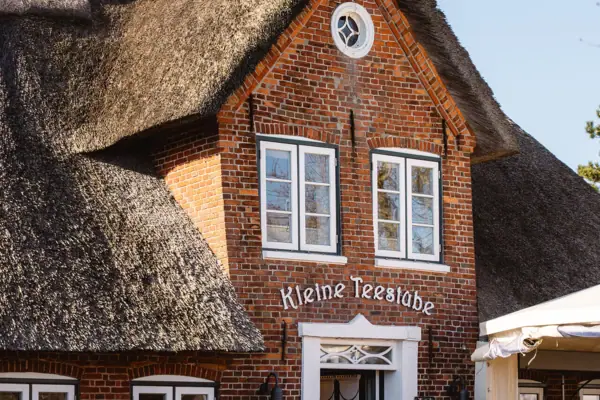
The Village of the Captains: As whaling captains began to amass wealth from the late 17th century onwards, they built magnificent Frisian-style houses for themselves in Keitum. Many of these still stand today: thatched, surrounded by roses and tall trees.
Places of interest in Keitum:
- A small tea room: on Gurtstig since 1985, serving Frisian cake, tea and a garden for warm days
- St Severin: the church on the outskirts of the village, some 800 years old, one of the oldest on the island
- Sylt Museum: housed in a captain’s house dating from 1759, offering insights into the island’s history and seafaring traditions
- Old Frisian House: furnished as it was in the days of its last inhabitants
- Keitum Cliff: a viewpoint overlooking the Wadden Sea
Morsum Cliff
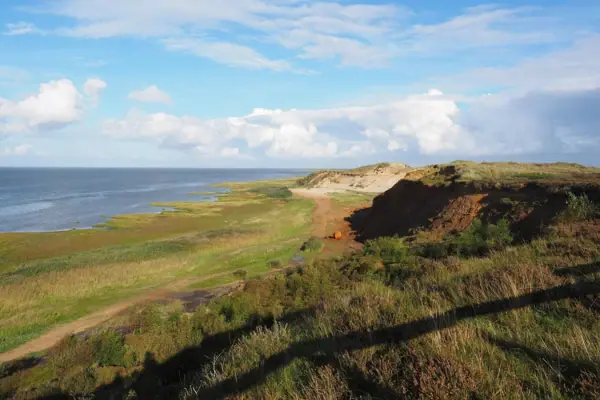
Ten million years at a glance: on the eastern tip of the island lies one of Schleswig-Holstein’s oldest nature reserves, which has been protected since 1923. At Morsum Cliff, smelting clay, limonite sandstone and kaolin sand lie exposed side by side, in layers ranging from white through ochre to dark brown. In 2006, the cliff was designated a National Geotope.
Tips for your visit:
- A short, signposted circular walk leads through heathland and along the cliff.
- Please stay on the paths: the cliff is fragile.
- Fossils may be viewed but not collected.
- After rain, the path can be slippery, so sturdy footwear is advisable.
Sights in the south of Sylt.
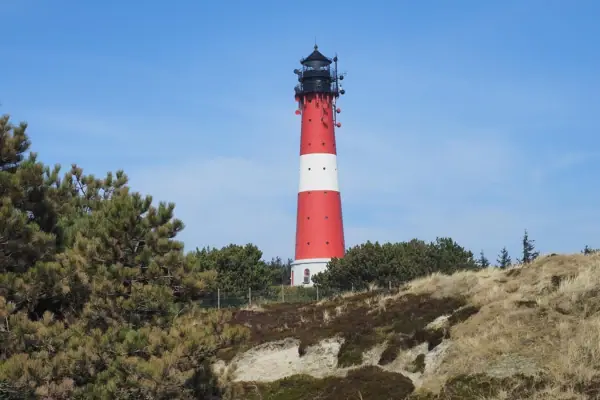
Hörnum Lighthouse
Striped red and white, 33 metres high, in operation since 1907: the Hörnum lighthouse stands atop a dune overlooking the village and is one of the island’s most photographed landmarks. Excursion boats set sail from Hörnum harbour to the seal colonies and the neighbouring islands.
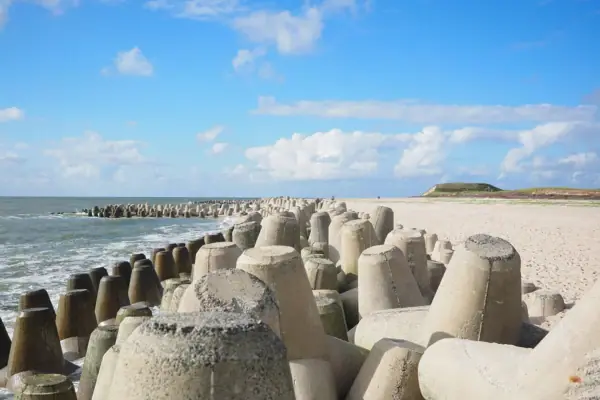
Hörnum Odde
The southern tip in flux: The Odde is the southern counterpart to the Ellenbogen and anything but stable. Year after year, storms and currents erode the sand here, causing the southern tip to constantly change shape. A striking photographic subject is the tetrapods on the beach: rows of four-legged concrete blocks that protect Hörnum from the surf.
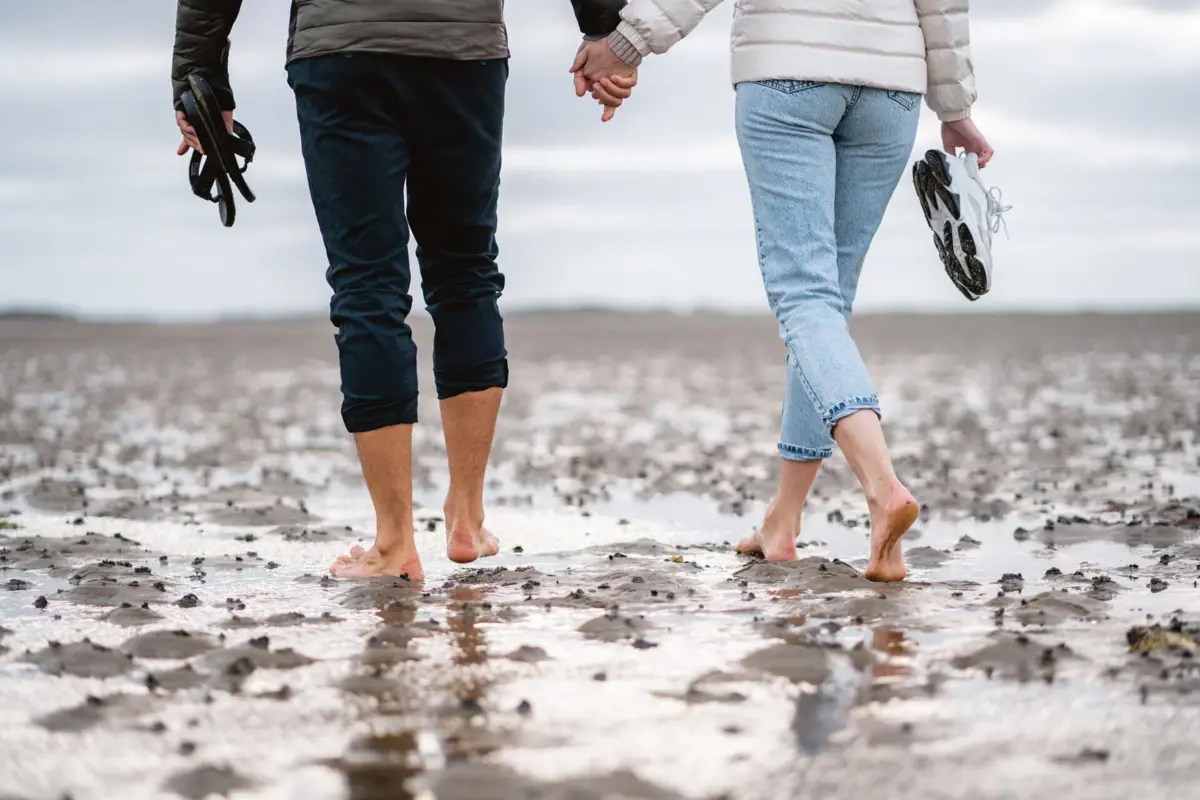
The Wadden Sea, a UNESCO World Natural Heritage Site.
Twice a day, the sea recedes, revealing a landscape found nowhere else but on the North Sea: tidal creeks, sandbanks, shells, lugworms and flocks of birds. The Wadden Sea has been a UNESCO World Natural Heritage Site since 2009.
The best way to experience it is on a guided mudflat walk. You can find more activities for your time on the island here:
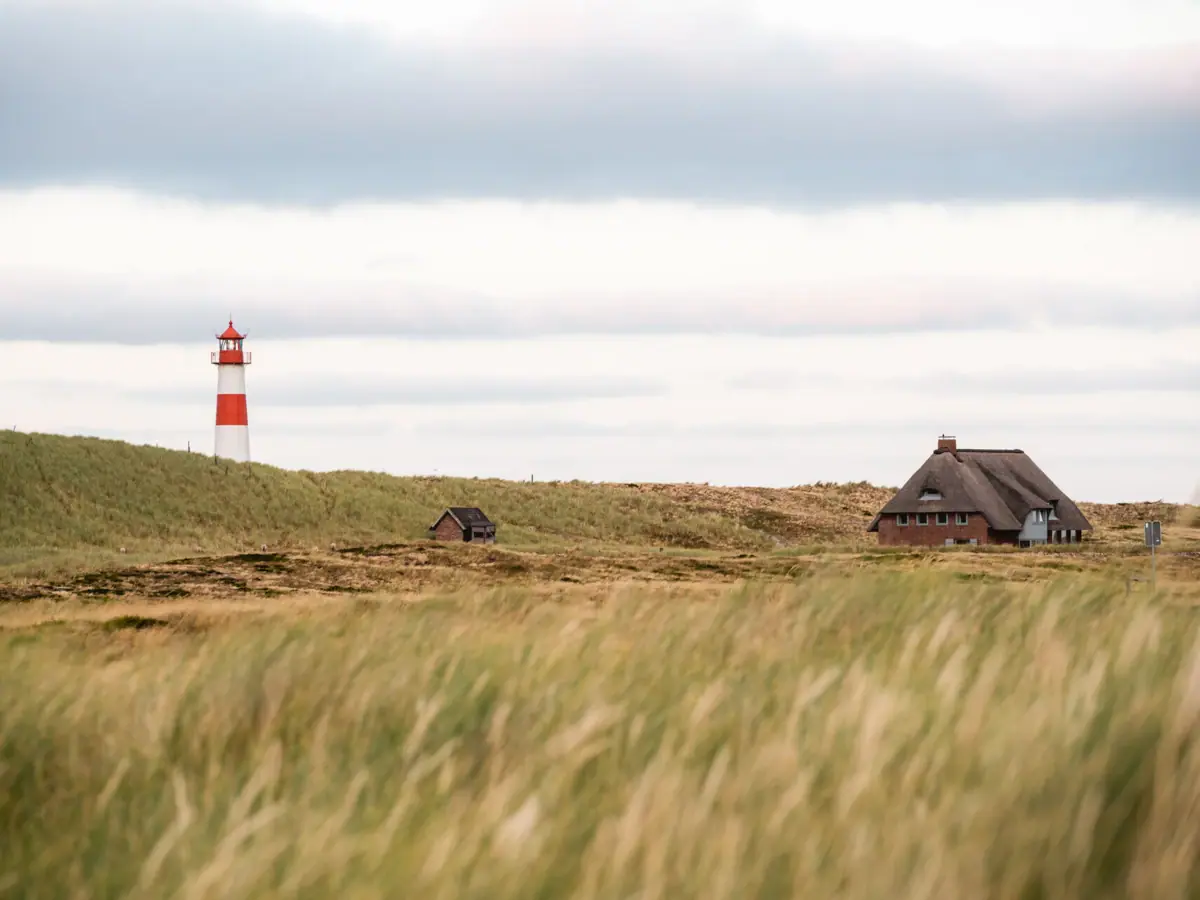
Sylt in the rain: places to visit on grey days.
When the sky hangs low and the rain beats against the windows, Sylt reveals a different side. These destinations are well worth a visit even in foul weather:
- Naturgewalten Experience Centre in List: experience the North Sea indoors
- Sylt Museum and the Old Frisian House in Keitum: the island’s history brought to life
- St Severin in Keitum: a peaceful spot with 800 years of history
- Rotes Kliff in a storm: a experience in itself if you’re well wrapped up
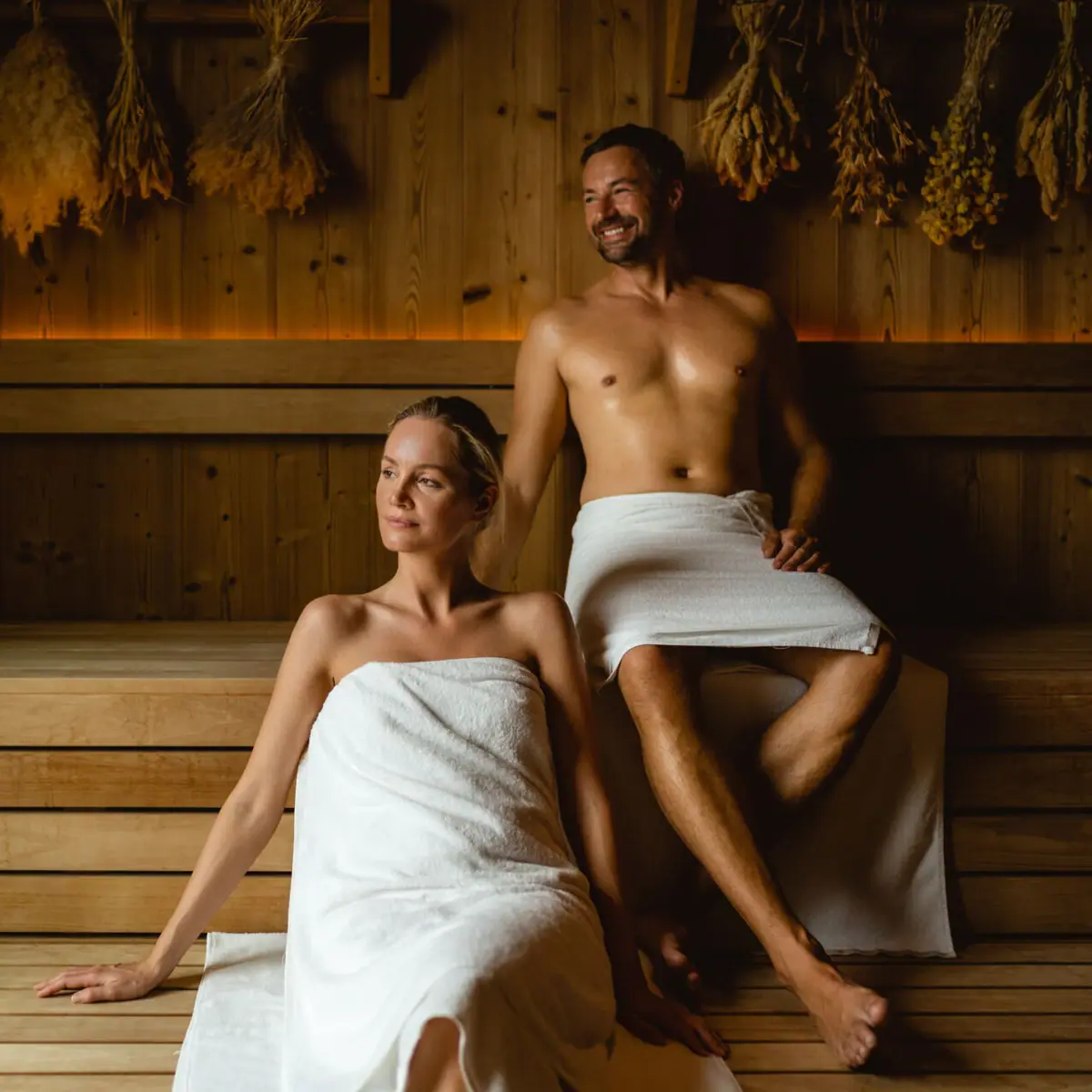
- SPA-ROSA at A-ROSA Sylt: the warmth of the saunas, the view of the dunes, the patter of rain outside
Weather forecast for Sylt.
Frequently asked questions about Sylt’s sights.
What are the must-see attractions on Sylt?
Among the best-known sights are the Red Cliff, the Uwe Dune, the Lister Ellenbogen, the shifting dunes in the Listland region, the captains’ village of Keitum, the Morsum Cliff and the Hörnum lighthouse.
Can you go for a swim up to your elbows?
No. Swimming is prohibited at Lister Ellenbogen due to strong currents. Walks on the beach are permitted.
How high is the Uwe Dune?
The Uwe Dune near Kampen is 52.5 metres high, making it Sylt’s highest natural elevation. 110 steps lead up to the viewing platform.
How many lighthouses are there on Sylt?
Five: List-West, List-East, Kampen, Rotes Kliff and Hörnum.
What can you do on Sylt when it’s raining?
Some great places to visit include the Naturgewalten Experience Centre in List, the Sylt Museum and the Altfriesisches Haus in Keitum, as well as a spot of pampering at SPA-ROSA.
What attractions are near the A-ROSA Sylt?
List harbour is within walking distance. The shifting sand dunes in the Listland area and at Ellenbogen are also in the north of the island, just a few minutes away.
More Sylt moments in *Urlaubszeiten* magazine
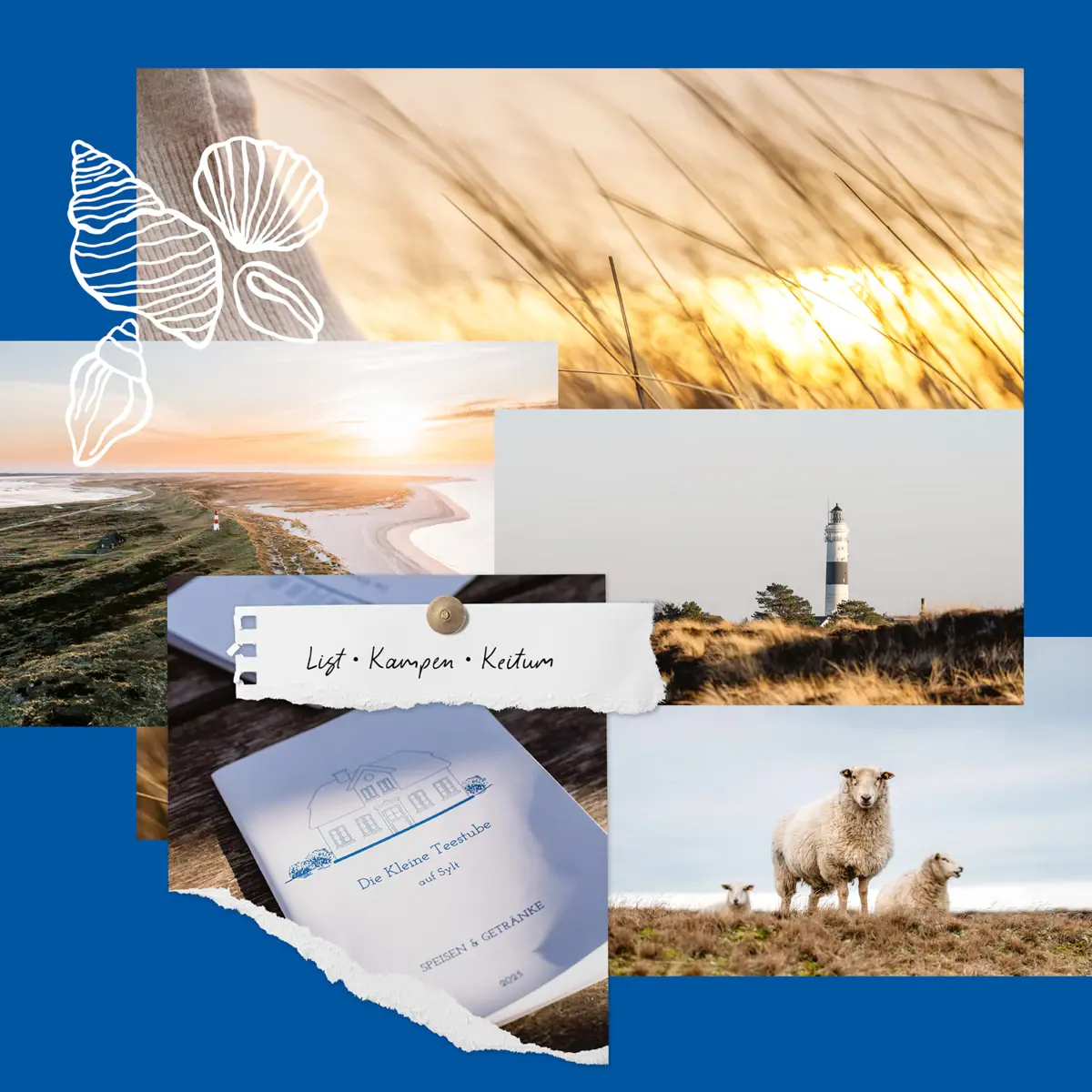
Fancy delving even deeper? In our magazine *Urlaubszeiten*, we share stories about the island, complete with tips you won’t find in any travel guide.
Sylt insider tips: An island tour for all the senses
Watching the sunrise with the sheep at Ellenbogen, afternoon tea and waffles at the Kleine Teestube in Keitum, a ‘Sylter Royal’ fresh from Blidsel Bay, and a glass of Crémant at the Rotes Kliff in the evening. A day that showcases the flavours of Sylt.
Holidays on the Wadden Sea: Nature in tune with the tides
The sea recedes, revealing a landscape that lasts for just a few hours. Find out what makes the Wadden Sea so special, when the best time is for a mudflat walk, and what sort of footwear is suitable.